Measure Applied Force
1-inch diameter

Cryogenic & magnet compatible
Apply huge forces of up to 90N at cryogenic temperature, allowing higher strains and larger samples. Compatible with high magnetic field, milikelvin temperatures, high vacuum and a 1-inch magnet bore (such as a quantum design PPMS). A key distinction with our CS products is the the FC devices have an integrated force sensor instead of a displacement sensor which gives a more direct and reliable measurement of sample stress.

Use with a wide range of probes
Suitable for numerous measurement techniques including resistivity, and AC susceptibility, scanning probe, confocal microscopy, NMR and Raman.
Below, a a WP101 wiring platform (included with the FC100) is used. This allows 4 contacts to be made to the sample using fine gold wires, so the resistivity can be measured as strain is applied.

High performance or rapid exchange
Samples are held at each end by titanium sample plates to provide homogeneous uniaxial strain. As well as the standard sample plates designed to apply high forces, the FC100 is also compatible with the SR100 sample carrier that allows multiple samples to be prepared in advance and be switched on and off rapidly, saving precious hours
on a valuable
instrument.

Compact. Fits 1-inch cryostat bore
Both the FC100 and FC150 fit vertically in a one-inch bore such as the Quantum Design PPMS/Dynacool. Integration with a PPMS/Dynacool is easy with a CRYOINSERT.


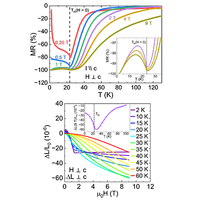
Uniaxial Stress Enhanced Anisotropic Magnetoresistance and Superconductivity in the Kagome Superconductor LaRu3Si2

Charge density wave and superconducting states of La3Co4Sn13 under uniaxial pressure

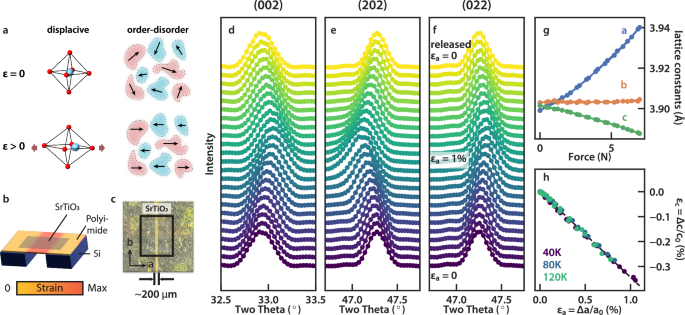
The classical-to-quantum crossover in the strain-induced ferroelectric transition in SrTiO3 membranes
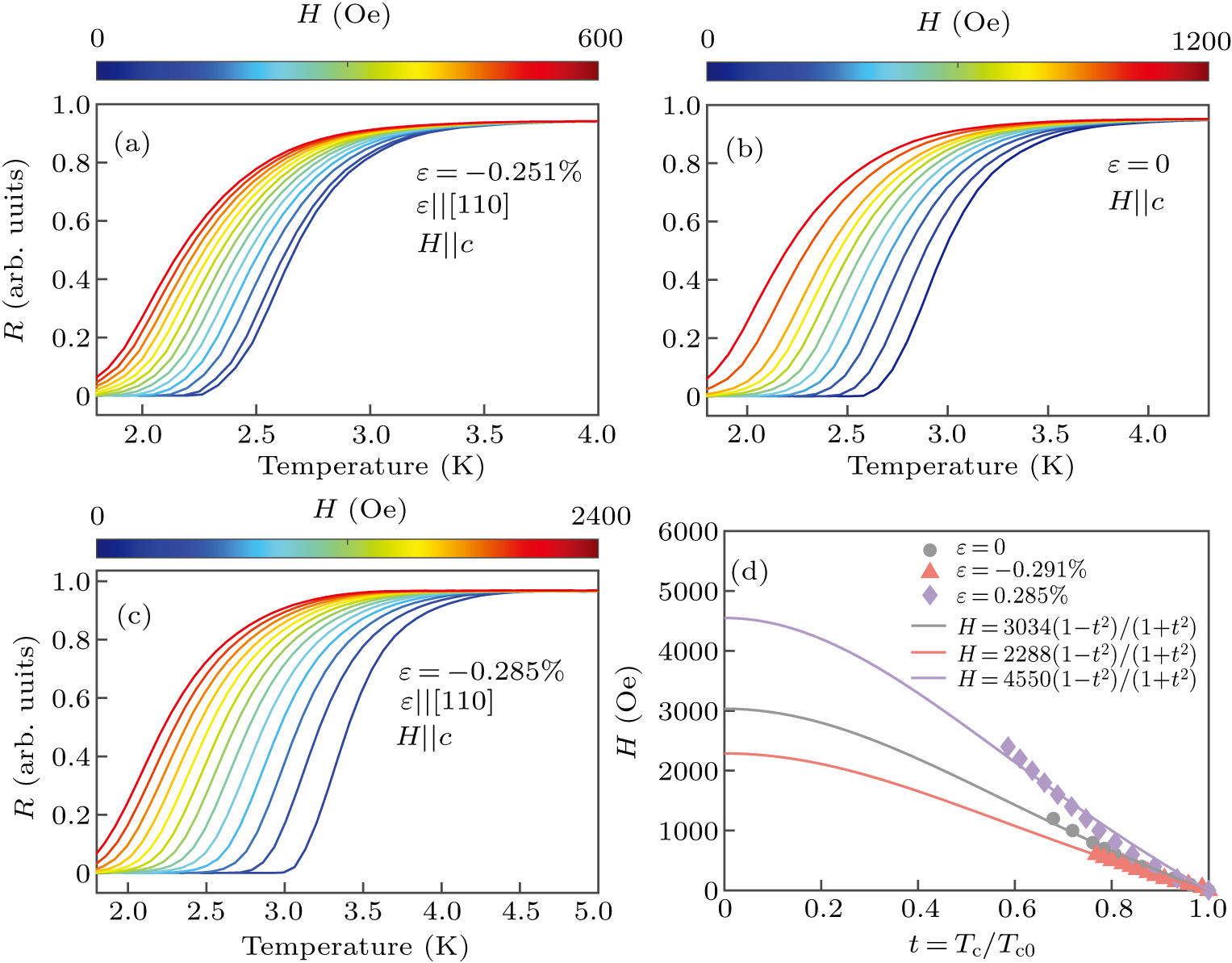
Evolution of pairing symmetry in FeSe1−𝑥S𝑥 as probed by in-plane strain tuning of 𝑇𝑐

Magnetic polaron formation in EuZn2P2
Control of the Electronic States of the Organic Conductor α-(BEDT-TTF)2I3 by Uniaxial Tensile and Compressive Strain

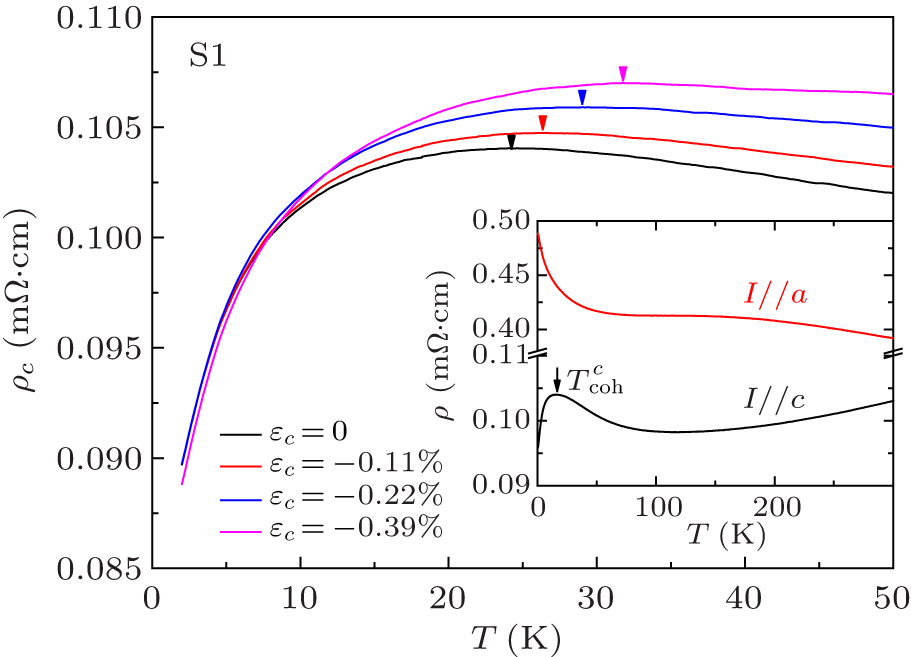
Tensile and compressive strain tuning of a Kondo lattice

Cryogenic Digital Image Correlation as a Probe of Strain in Iron-Based Superconductors

Electronic structure and magnetic and transport properties of antiferromagnetic Weyl semimetal GdAlSi

In-plane uniaxial-strain tuning of superconductivity and charge-density wave in CsV3Sb5
Uniaxial stress effect on quasi-one-dimensional Kondo lattice CeCo2Ga8
Strain-Stabilized (π, π) Order at the Surface of Fe1+xTe
